Buying a Breathalyser in the UK: A No-Nonsense 2026 Buyer's Guide
Buying a breathalyser comes down to one decision: an electrochemical (fuel-cell) sensor, not a cheap semiconductor one. This UK guide compares sensor types, accuracy and price, and explains your rights if you are stopped, so you can choose a personal unit whose readings you can actually trust.
Why Buy a Personal Breathalyser in 2026?
A personal breathalyser gives you a clear, data-backed reading of your breath alcohol level before you get behind the wheel — no guesswork, and no "I only had two pints" mental maths. If you have been burned by a cheap unit's wandering readings, buying a breathalyser with the right sensor is what fixes that.
The technology has come on a long way. A few years ago most affordable units used semiconductor sensors that drifted after a few months. Today, electrochemical (fuel-cell) breathalysers — once reserved for professional and police use — are available to UK buyers at consumer prices, and they hold their accuracy far better. That sensor type is the single biggest factor when buying a breathalyser.
The morning after is where most people get caught out. You feel fine, you've slept 6 hours, but your body hasn't processed all the alcohol yet. That's exactly why buying a breathalyser test makes sense — it removes the dangerous assumption that you're "probably fine."
Whether you're a shift worker checking levels before an early commute, someone who enjoys a glass of wine with dinner, or you just want peace of mind — there's a strong case for having one in your glovebox.
Types of Breathalyser Sensors Explained
Not all breathalysers work the same way. The sensor type determines accuracy, lifespan, and price.
Semiconductor Sensors
These are the cheap ones. Usually £8–£15. They use a tin oxide sensor that reacts to alcohol vapour. The problem? They also react to other substances — acetone, cigarette smoke, even some mouthwashes. Accuracy drifts significantly after 200–300 uses.
Would you trust a cheap semiconductor unit the morning after? Not really.
Electrochemical (Fuel Cell) Sensors
This is what police-grade devices use. An electrochemical sensor specifically targets ethanol molecules, which means far fewer false readings. They're accurate to ±0.05 mg/L and maintain calibration for 500+ tests or 12 months — whichever comes first.
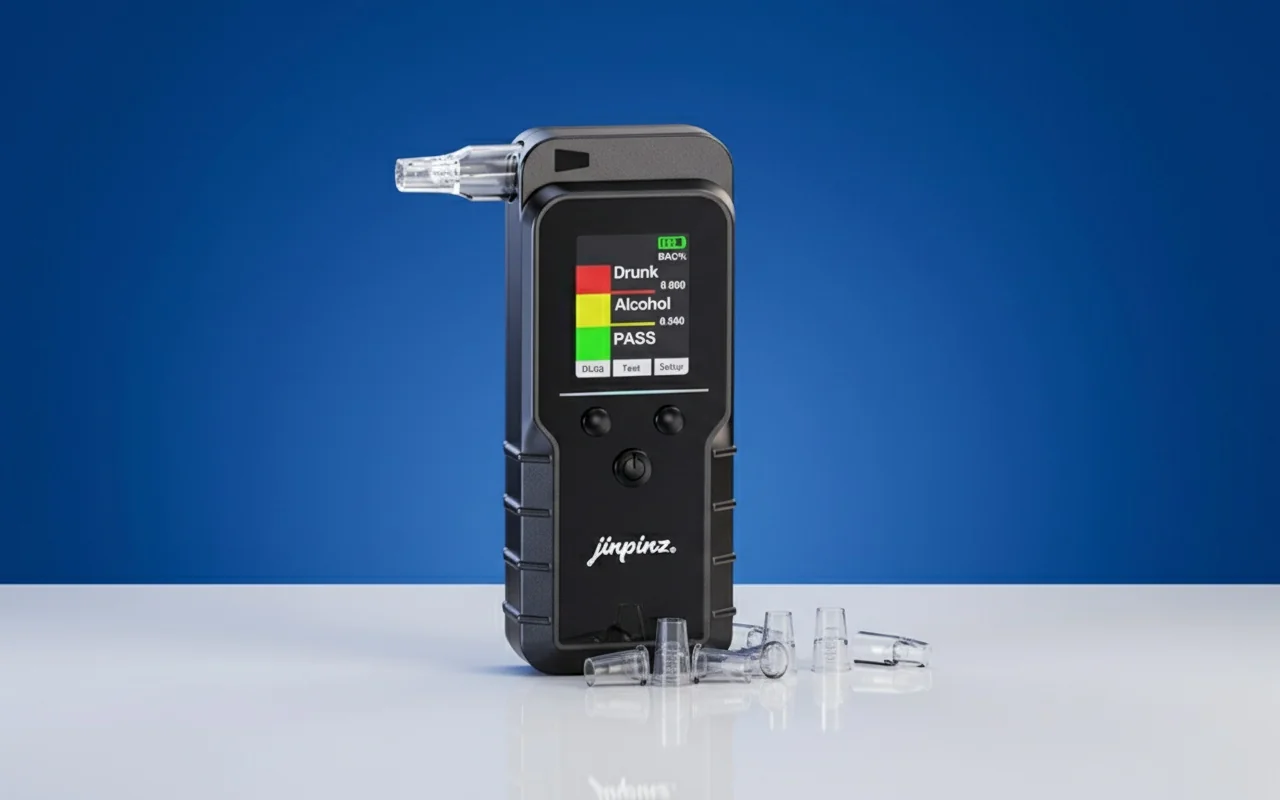
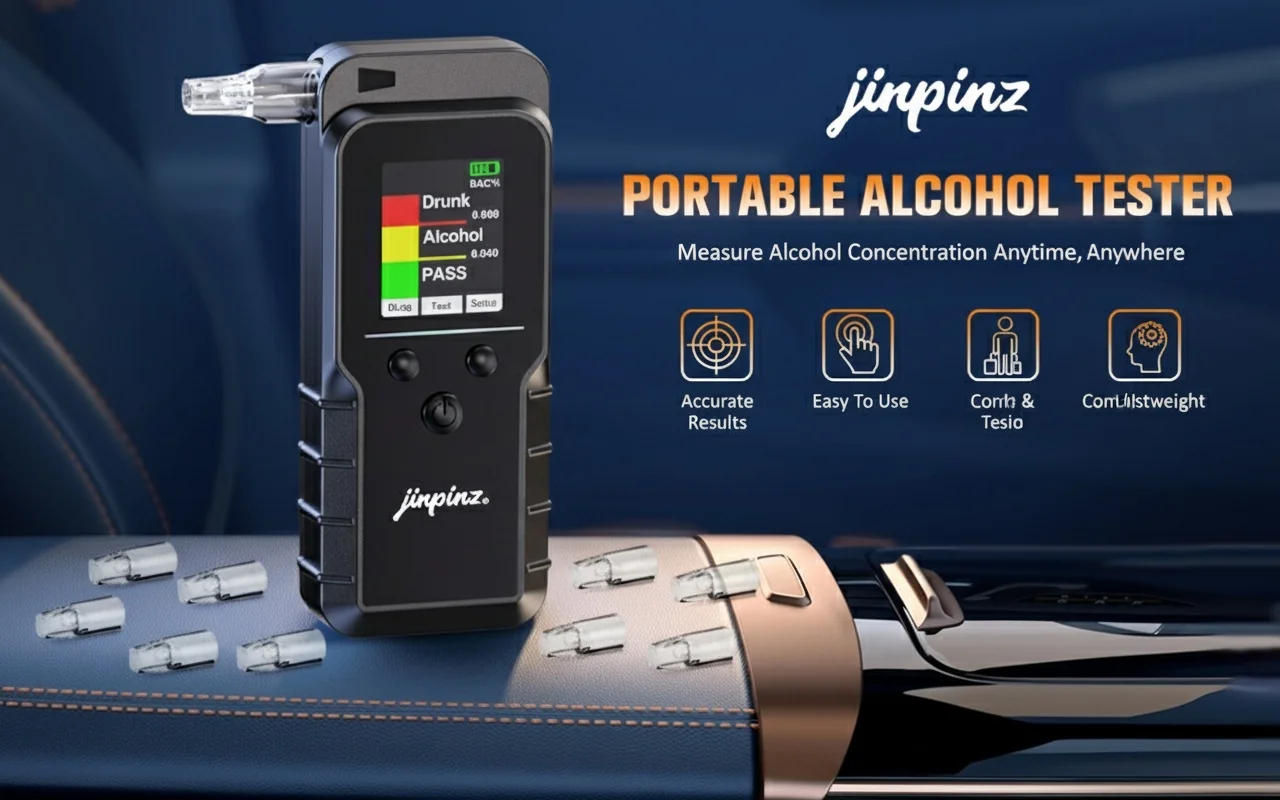
The JINPINZ breathalyser kit at £285.61 uses exactly this fuel-cell technology. Put a fuel-cell unit next to a cheap semiconductor one and the difference is night and day: on the same breath, a semiconductor can read wildly differently, and it is the fuel-cell reading that holds up against a calibrated reference. That repeatability is what you are paying for.
Infrared Spectroscopy
Used in evidential police station devices. These cost thousands and aren't practical for personal use. Mentioned here just so you know the full picture.
What to Look for When Buying a Breathalyser Test

Right then, here's what actually matters when you're choosing a personal alcohol tester. Forget the flashy marketing — focus on these specs:
Sensor Type
Electrochemical, every time. It is the single most important factor when buying a breathalyser: if you are spending real money, don't cheap out on a semiconductor unit that will give you dodgy readings within six months.
Accuracy Rating
Look for ±0.05 mg/L or better. Some budget units claim "high accuracy" without publishing actual tolerance figures. That's a red flag.
Warm-Up and Response Time
Most decent units warm up in 10–20 seconds and deliver a result within 5 seconds of blowing. The JINPINZ kit manages a 10-second warm-up, which is gert tidy for the price point.
Mouthpiece Design
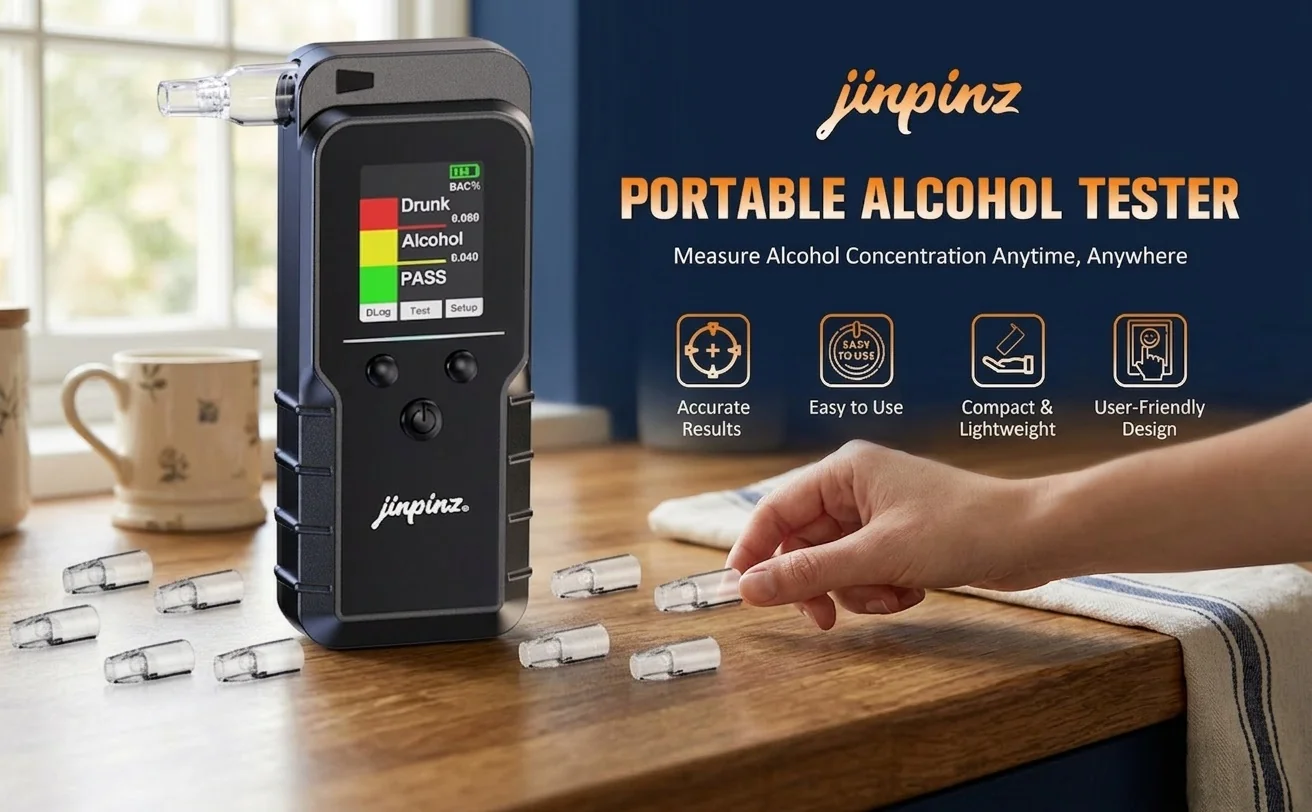
Replaceable mouthpieces matter for hygiene and accuracy. Shared devices need individual mouthpieces. The JINPINZ Breathalyser Kit includes multiple mouthpieces in the box — no extra spend needed.
Calibration
Every breathalyser needs recalibrating eventually. Check whether the manufacturer offers a calibration service and how often it's recommended. Typically every 6–12 months or 500 uses.
Certifications
Look for devices tested to BSI standards or EN 16280 (the European standard for personal breath alcohol testing devices). This isn't just a badge — it means the device has been independently verified.
How to Use a Breathalyser: Step-by-Step
Getting an accurate reading depends entirely on using the device correctly. Here's how to use a breathalyser properly — because even the best kit gives rubbish results if you don't follow the basics.
Before You Blow
Wait at least 20 minutes after your last drink. This is crucial. Residual mouth alcohol from a recent sip will spike your reading way above your actual blood alcohol level. Same goes for mouthwash, breath spray, or even some medications.
Don't smoke for 5 minutes before testing either.
The Test Itself
- Switch on the device and wait for the warm-up period (usually 10–20 seconds — the display will tell you when it's ready)
- Take a normal breath in — don't hyperventilate
- Blow steadily into the mouthpiece for 4–6 seconds at moderate pressure
- Keep blowing until the device beeps or signals it has enough sample
- Wait 3–5 seconds for the reading to appear
Reading Your Results
Most personal breathalysers display results in mg/L (milligrams per litre of breath). The UK legal limit in England and Wales is 0.35 mg/L. In Scotland, it's 0.22 mg/L.
One thing worth clarifying: devices display results in different units. Some show BAC (blood alcohol concentration) as a percentage, others show BrAC (breath alcohol concentration) in mg/L or µg/100ml. Make sure you know which your device uses before interpreting a reading.
UK Drink Drive Limits: England, Wales & Scotland
The drink drive limit in Scotland is significantly lower than in England and Wales. This catches people out constantly — especially if you're driving across the border.
| Measurement | England & Wales | Scotland |
|---|---|---|
| Breath (BrAC) | 35 µg per 100ml | 22 µg per 100ml |
| Blood (BAC) | 80 mg per 100ml | 50 mg per 100ml |
| Urine | 107 mg per 100ml | 67 mg per 100ml |
| Approximate pint equivalent* | ~2 pints standard lager | ~1 pint standard lager |
*Approximate only — varies hugely by weight, metabolism, food intake, and individual biology. Never rely on "number of drinks" as a guide.
Scotland lowered its drink drive limit in December 2014, bringing it in line with most European countries. The scotland drink drive limit of 50mg/100ml blood (or 22µg/100ml breath) means even a single pint could put some people over. If you regularly drive in Scotland, buying a breathalyser test isn't optional — it's essential kit.
There's been ongoing discussion about whether England and Wales will follow Scotland's lead. As of June 2026, no change has been confirmed, but the NHS guidance on alcohol consistently recommends the safest approach is simply not drinking at all if you plan to drive.
Can You Refuse a Breathalyser Test in the UK?
Short answer: technically yes, but the consequences are severe. You absolutely have the physical ability to refuse — but legally, you'll wish you hadn't.
Roadside Breath Test
Under Section 6 of the Road Traffic Act 1988, a police officer can require you to provide a breath specimen if they have reasonable cause to believe you've been drinking, you've committed a moving traffic offence, or you've been involved in an accident.
Refusing without reasonable excuse is a criminal offence. The penalty? Up to 6 months' imprisonment, an unlimited fine, and a minimum 12-month driving ban. That's the same maximum penalty as actually being over the limit.
What Counts as "Reasonable Excuse"?
Medical conditions that genuinely prevent you from providing a sample — severe asthma, certain lung conditions, or a physical injury from an accident. "I don't want to" doesn't count. "I want to speak to my solicitor first" doesn't count either, though you can request this at the station.
At the Police Station
If you're arrested and taken to the station, you'll be asked to provide two evidential breath samples on a calibrated machine (typically the Intoximeter EC/IR or Evidenzer). Refusing this is also an offence carrying the same penalties.
So can you refuse a breathalyser test UK? Legally, the answer is that refusal carries penalties equivalent to — or sometimes worse than — being found over the limit. My honest advice? If you're worried about failing, you should've tested yourself before driving. That's the whole point of owning a personal breathalyser.
Your Driving Licence and Consequences
A drink-drive conviction stays on your UK driving licence for 11 years. You'll need to declare it to insurers, and premiums typically increase by 50–90%. Some employers — particularly those requiring a clean licence — may terminate employment. If you hold a UK digital driving licence or standard photocard, the DR10 or DR50 endorsement code will be visible on any gov uk driving licence check.
Worth the risk? Obviously not. A £285.61 breathalyser kit versus potentially losing your licence, your job, and your freedom. The maths is pretty clear.
Buying a Breathalyser Test: Product Comparison 2026
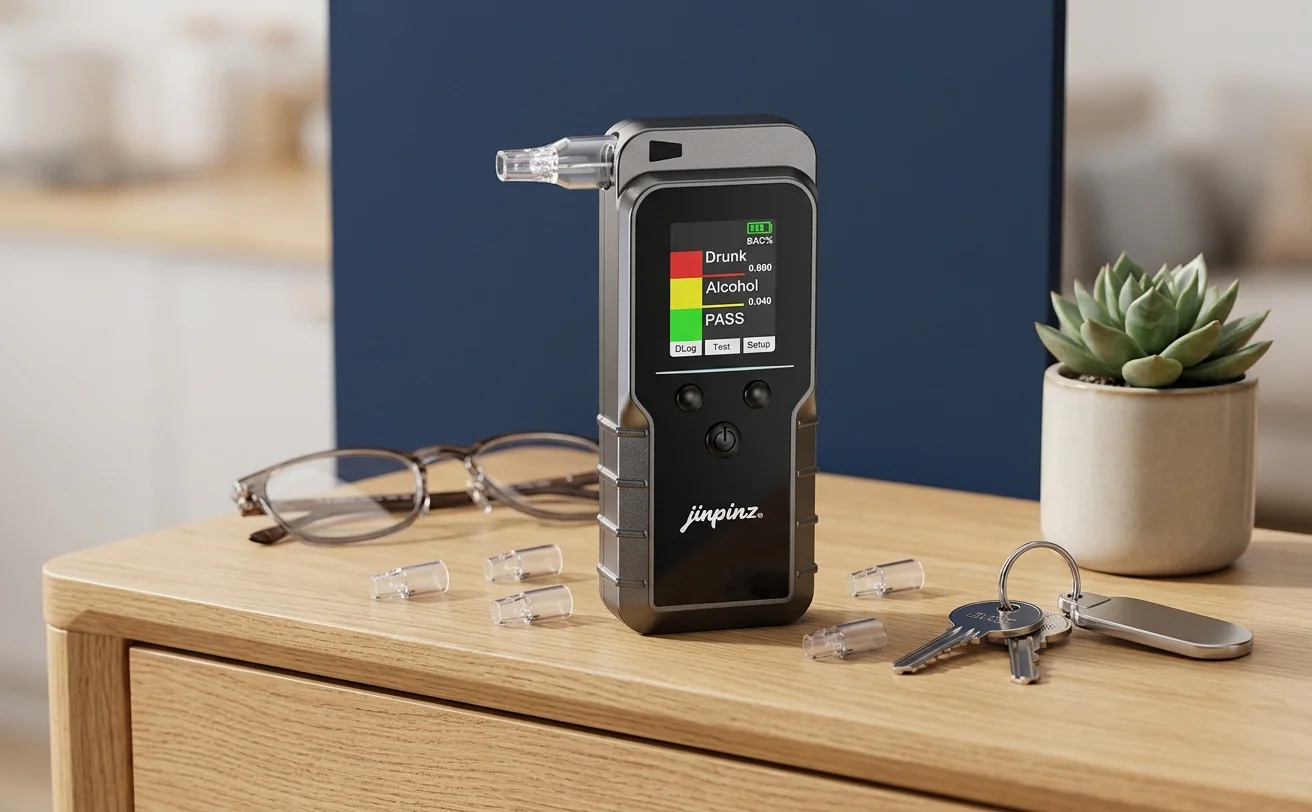
For UK buyers wanting electrochemical accuracy without police-grade pricing, the JINPINZ Pro Breathalyser (£285.61) offers fuel-cell sensor technology with free UK delivery and 30-day returns.
Here is how the main types of personal breathalyser available in the UK stack up:
| Feature | JINPINZ Breathalyser Kit | Budget Semiconductor Unit | Premium Brand (£60+) |
|---|---|---|---|
| Price | £285.61 | £8–£15 | £60–£120 |
| Sensor Type | Electrochemical (fuel cell) | Semiconductor | Electrochemical |
| Accuracy | ±0.05 mg/L | ±0.15 mg/L | ±0.05 mg/L |
| Warm-up Time | 10 seconds | 15–30 seconds | 8–15 seconds |
| Sensor Lifespan | 500+ tests / 12 months | 200–300 tests / 6 months | 500–1000 tests / 12 months |
| Mouthpieces Included | Multiple (replaceable) | 1–2 | 5–10 |
| UK Delivery | Free | Varies (£2–£4) | Free |
| Eco-Friendly Packaging | Yes | No | Varies |
| Made in Britain | Yes | No (typically imported) | Varies |
There are always cheaper options. But when a device is telling you whether it is safe to drive — whether you might lose your licence or hurt someone — is saving a few pounds worth the trade-off in accuracy? A £9 marketplace semiconductor unit can easily disagree with a fuel-cell unit by a wide margin on the same breath, and a gap that small still tips the wrong way after one more drink. For a device this important, accuracy is the whole point.
Bang for your buck, the JINPINZ kit at £285.61 with free UK delivery and eco-friendly packaging hits a proper sweet spot. Electrochemical accuracy without the premium price tag.
Frequently Asked Questions
How accurate are personal breathalysers compared to police devices?
Electrochemical personal breathalysers like the JINPINZ kit (£285.61) use the same fuel cell sensor technology as police roadside devices, achieving accuracy of ±0.05 mg/L. Semiconductor models are significantly less reliable at ±0.15 mg/L. No personal device is evidential in court, but electrochemical units provide a trustworthy indication for personal decision-making.
Can you refuse a breathalyser test in the UK without penalty?
No. Refusing a police breath test without reasonable medical excuse carries penalties of up to 6 months' imprisonment, an unlimited fine, and a minimum 12-month driving ban under Section 6 of the Road Traffic Act 1988. These penalties match or exceed those for actually being over the limit. Only genuine medical conditions preventing breath provision are accepted as reasonable excuse.
What is the drink drive limit in Scotland versus England?
Scotland's drink drive limit is 22 µg per 100ml of breath (or 50mg per 100ml blood), significantly lower than England and Wales at 35 µg per 100ml breath (80mg per 100ml blood). Scotland adopted the lower limit in December 2014. This means approximately one pint of standard lager could put some individuals over the Scottish limit.
How long after drinking should I wait before using a breathalyser?
Wait a minimum of 20 minutes after your last alcoholic drink before testing. Residual mouth alcohol from recent consumption creates artificially high readings that don't reflect your actual blood alcohol level. For morning-after testing, your body metabolises alcohol at roughly 0.015–0.017% BAC per hour, meaning 5 pints could take 12+ hours to fully clear.
How often does a personal breathalyser need calibrating?
Most electrochemical breathalysers require recalibration every 6–12 months or after approximately 500 tests, whichever comes first. Semiconductor units drift faster and may need calibration after just 200–300 uses. Always check your manufacturer's specific recommendations and look for brands offering a UK-based calibration service.
Will a drink-drive conviction affect my driving licence check?
Yes. A drink-drive conviction results in a DR10 or DR50 endorsement code visible on any gov uk driving licence check for 11 years. This affects insurance premiums (typically 50–90% increase), employment requiring clean licences, and international driving. The endorsement appears whether you hold a photocard licence or use the UK digital driving licence system.
Key Takeaways
- Electrochemical sensors are non-negotiable — semiconductor breathalysers drift too quickly and produce unreliable readings with accuracy only ±0.15 mg/L versus ±0.05 mg/L for fuel cell units
- The JINPINZ Breathalyser Kit at £285.61 offers electrochemical accuracy, free UK delivery, eco-friendly packaging, and British manufacturing — the best value in its category for 2026
- Scotland's drink drive limit (22 µg/100ml breath) is 37% lower than England and Wales (35 µg/100ml) — one pint can put you over in Scotland
- Refusing a police breathalyser test carries penalties equal to or worse than being over the limit: up to 6 months' imprisonment and minimum 12-month ban
- Always wait 20 minutes after your last drink before testing to avoid false high readings from residual mouth alcohol
- Morning-after driving is the most common way people unknowingly drive over the limit — your body processes roughly one unit per hour
- A DR10 endorsement stays on your licence for 11 years and increases insurance premiums by 50–90% on average
Is Buying a Breathalyser Test Worth It?
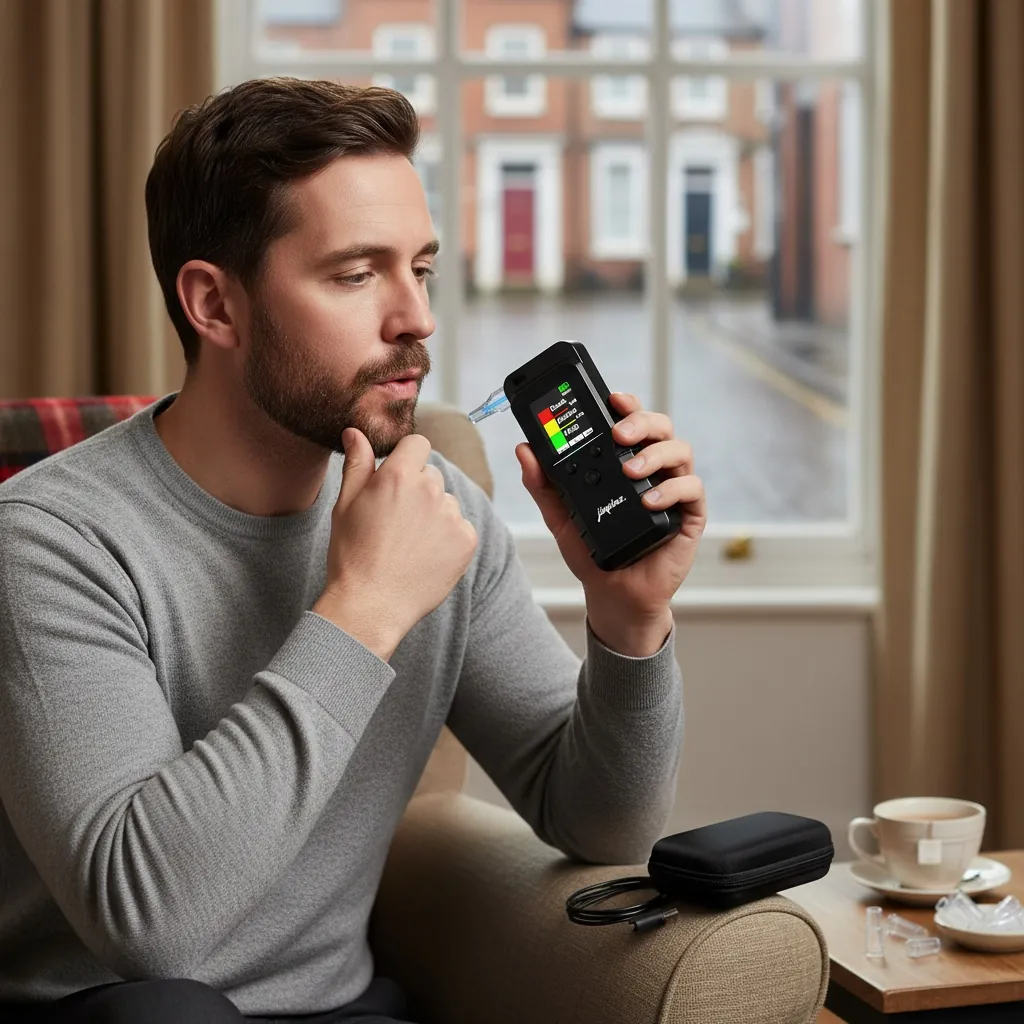
Absolutely. Morning-after stops catch people out every week: four pints the night before, seven hours' sleep, feeling completely fine — and still over the limit at the roadside. Licence, job, the lot, gone. A £285.61 device that removes that guesswork is cheap insurance by comparison.
For £285.61 you get a device that takes about 15 seconds to give a clear answer: no guessing, no "I reckon I'm alright" — just data you can act on.
Whether you're preparing for your uk driving licence theory test and want to understand the law, or you're a seasoned driver who enjoys a drink socially — a quality breathalyser is one of those things you buy hoping you'll never actually need the warning. But when you do, you'll be glad it's in your glovebox.
Stay safe out there, gang. And if you're ever in doubt — just don't drive. Sorted.
Avoid bad readings with an electrochemical sensor
The JINPINZ Pro Breathalyser uses fuel-cell technology for reliable BAC readings. Free UK delivery and 30-day returns.
View JINPINZ Pro Breathalyser — £285.61